

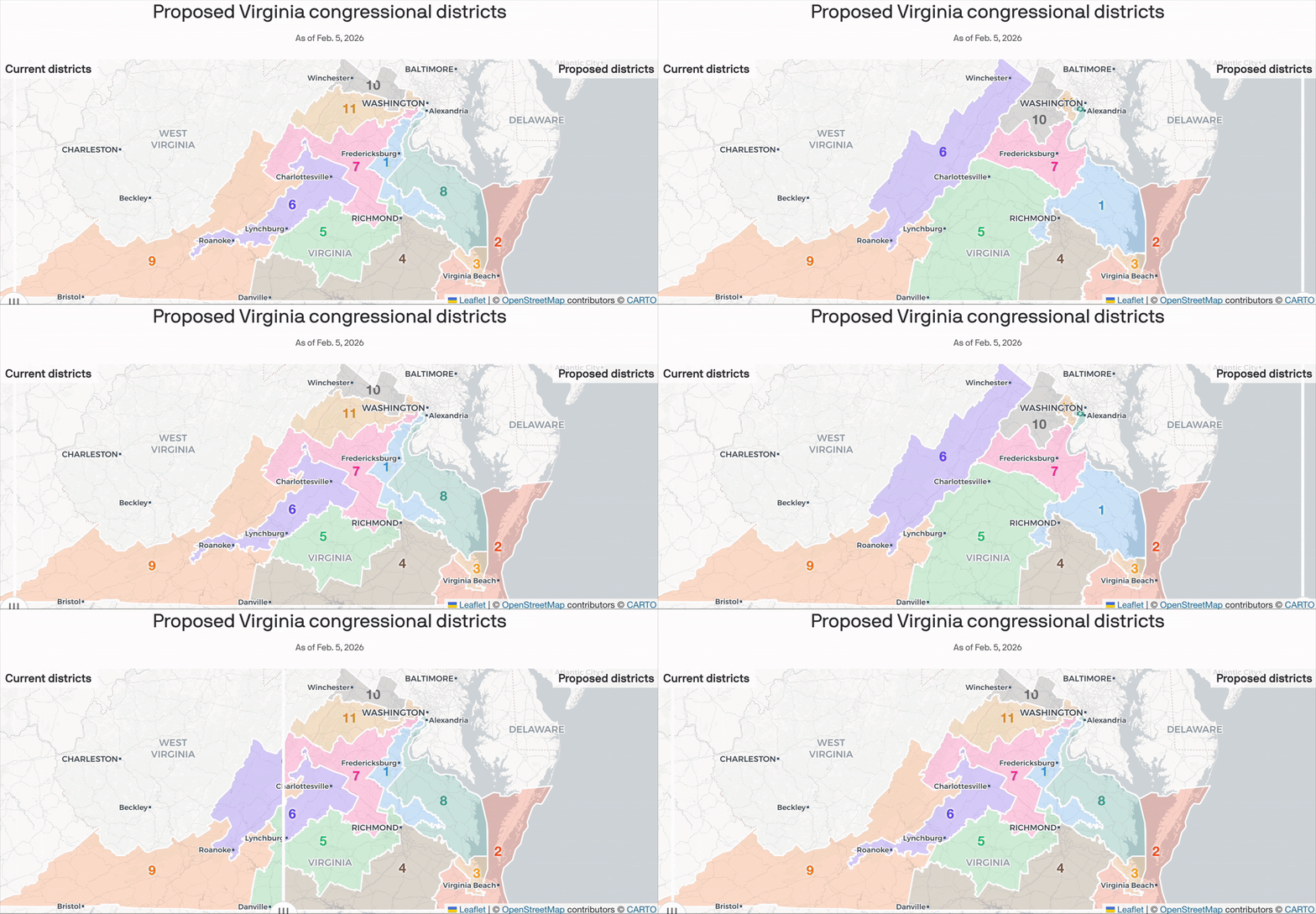
Fairfax, VA – On April 21, 2026, half an hour before midnight, the vote count for the special election referendum favored Virginia’s congressional redistricting, with 51.5% of voters voting YES and 48.6% voting No in an extremely close race. In Fairfax County, nearly 70% of voters voted YES for redistricting.
The question on the ballot asked, “Should the Constitution of Virginia be amended to allow the General Assembly to temporarily adopt new congressional districts to restore fairness in the upcoming elections, while ensuring Virginia’s standard redistricting process resumes for all future redistricting after the 2030 census?” In other words, should congressional district boundaries be temporarily redrawn or not?
The results of this election were widely awaited for, given what the results will mean for the country. In the U.S. House of Representatives, Virginia currently holds 11 seats, with 6 held by Democrats and 5 by Republicans in a close division. In the Commonwealth, Democrats also hold a majority in the Virginia General Assembly. With the voting favoring congressional redistricting, this dominant party will have the power to redraw districts, gaining an advantage in 10 districts with the potential net gain of 4 seats in a plan signed by Governor Spanberger.
With these changes permitting Democrats to gain power, Republicans including previous Virginia Governor Glenn Youngkin have outwardly opposed this election, describing this referendum to Fox News as a “power grab” that is “wrong.” However, Democratic support for this election and redistricting follows what has been described as a necessary response to Republican-initiated redistricting in other states, which has actively been pushed for by President Donald Trump.
These changes will be critical in the power balance between Republicans and Democrats in the House, especially during President Trump’s last years in his final term. Furthermore, by allowing state lawmakers the position to redraw district boundaries that will last for the next four years, the resulting balance between the two parties will also affect the next presidency, regardless of if the nation’s next leader is a Republican or Democrat.